

It is not very difficult to distinguish a red wine white, rosé or sweet. The differences are obvious, but not many lovers of this ancient drink are able to recognise the type or varieties of grapes that make up a wine. That is, to identify the single-varietal wines of the Multivarietal wines.
A single-varietal wine, for example, is one that is made from a single type of grape. Of course, there is a whole host of elements behind single-varietal wines, such as the way they are selected, aged, care of the vine and the production processes. However, they are easier to recognize in a tasting than multivarietals.
Now that we are talking about the multivarietal wines, We can easily deduce that they’re made from more grapes, but what makes them so special and unique? At Cosme Vins, we’re going to uncover some information about this type of wine.
Blended Wines: What Are They?
The Multivarietal wines They are made by blending two or more grape varieties. The winemaking techniques vary, but in every case they share the same goal: to create a wine capable of expressing the sensory qualities of all the varieties that make it up.
Keep in mind, this isn't just an exercise in oenological alchemy, but a compensatory practice designed to bring out greater balance and sensory complexity in a wine.
Let's consider, for example, a red grape variety with a fresh profile and astringent, such as Nebbiolo. By blending it with a variety that has a distinctly round character, such as Merlot, the acidity and astringency of Nebbiolo will be softened and balanced depending on the respective percentages in the blend.

The purpose of this type of wine, therefore, is not to correct defects in a particular grape variety, but to create a new wine with its own sensory qualities.
What is the winemaking process like for this type of wine?
The preparation of Multivarietal wines It is widespread throughout the world, a practice that can be considered as old as wine itself. In fact, many of the world’s famous wine-growing regions produce wines by blending different varieties, so the practice should be understood as completely normal, well-established, and prolific.
Many of the world's major wine-producing regions produce wines of this type, such as Bordeaux, Valpolicella, and Chianti. That said, they cannot be considered better than single-varietal wines. It would be a questionable assumption with no practical or sensory basis.
Key Factors
Next, let's outline the key steps in the production process for how the Multivarietal wines:
- The main factor is the presence of two or more grape varieties, generally belonging to the same type (white or red), although this is not an essential or fundamental requirement.
- In most cases, however, it involves blending grapes of the same type. That is, white varieties for white wines, red grapes for red wine.
Production Techniques
Blending different grapes to create a unique wine is essentially done in two different ways:
- The first technique involves the simultaneous and single fermentation of all the varieties. After the harvest, the grapes are pressed together to produce a single must, which is then fermented.
- The second technique involves making wines from each individual grape variety and then blending them to create a unique wine. It is important to note that this winemaking method is more widespread than the Coupage, since it allows for quality control of the final product through the application of techniques and procedures specific to each variety.
Consideraciones
It is important to keep in mind that each variety reaches full maturity at its own pace. Therefore, the blend should ideally be made with grapes that ripen during the same period.
Now, with varieties that ripen at different times, winemakers prefer to use wine to bring out the best in each individual grape, while respecting their specific biological and oenological needs.
This aspect is very important for red grape varieties, for which technological ripeness is not taken into account. In other words, it is determined by the sugar content, but above all by polyphenolic ripeness.
-
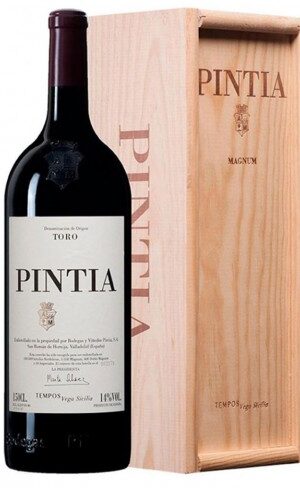 Pintia 2021 Doble Magnum 3L399,00 €
-
 Chateau Lafleur-Petrus 2023295,00 €
-
 Louis Latour Chateau Corton Grancey 2022195,00 €
-
 Le Petit Mouton de Mouton Rothschild 2023265,00 €
-
 Vega Sicilia Unico 2014 Magnum840,00 €
-
 Chateau Haut-Brion 2023620,00 €
-
 Chateau Mouton Rothschild 2023645,00 €
-
 Chateau Lafite-Rothschild 2023795,00 €
The Multivarietal Wine Tasting
The study of Multivarietal wines This presents the taster with a greater challenge, since the wine poured into the glass is also the result of the characteristics of various grape varieties. This means that one must be thoroughly familiar with the characteristics of each individual grape in order to identify and recognize it within the wine’s overall organoleptic profile.
In other words, it's like recognizing one person among many others, lost in a crowd where there are other people as well—some of whom may even know each other.
Why is the tasting more difficult?
Of the three stages of sensory analysis (sight, smell, and taste), appearance generally provides fewer clues than the other two stages. This is mainly because the resulting color is often misleading with regard to the qualities of each individual variety.
Therefore, before we begin the tasting of Multivarietal wines, it is best to focus on single-varietal wines and their various oenological and regional expressions. Even when tasting wines made from different grape varieties, a general rule applies: you cannot recognize what you do not know.
A Method for Studying Multi-Varietal Wines
It follows, therefore, that the study of the Multivarietal wines It comes after working with single-varietal wines, precisely to gain the experience and skill needed to recognize the different grape varieties.
A good method is to study both types of wines at the same time and make use of comparison. In any case, it is necessary to know the individual varieties, because you will have to be able to identify them among the others.
The difficulty of the exercise obviously increases according to the number of grapes that make up the multivarietal wine.
Conclusions
The Multivarietal wines They are a true work of art because they frame an entire production process that seeks to achieve a balance between the different notes provided by some grapes. Therefore, it is not an easy thing to achieve.
In addition, the tasting of this type of wine has a higher degree of complexity than single varietals. An exercise that leads to success through practice
Of course, no type can be considered better than the other: they are different oenological styles that produce diversified results in terms of quality. In both cases, you can create anything from ordinary and modest wines to wines of infinite grandeur.